Showing posts with label Pre-Intermediate. Show all posts

Sunday, 11 November 2018

Making Suggestions and TV Language

Making Suggestions and TV Language

Scaffolding a listening activity using the Woodpecker app


Photo by freestocks.org on Unsplash

In this lesson, I have focused on three areas my students often have difficulty with: talking about their TV viewing habits, making suggestions and listening. 

When I teach expressions for making suggestions, I take the opportunity to highlight the difference between the more formal way of making a request, 'Would it be possible to meet with you on Friday?' and the more common, native way of suggesting, 'Let's meet on Friday'.  I explain that suggestions are frequently used by native speakers when chatting and also in more formal business situations. In general, English speakers are becoming less formal. Therefore, it's important for students to familiarise themselves with such expressions both for comprehension and communication.

In the age of digital streaming and video on demand, chatting about TV shows and online streaming services is commonplace. Students often lack the vocabulary needed to participate in such conversations, so the expressions and exercises in this lesson are intended to help them express themselves more confidently. 

The in-class lesson materials and the homework, form a three-tiered scaffolding activity aimed to develop listening skills.  The lesson is used as a pre-listening activity. The homework includes a listening activity which is broken down into parts and should be completed with the help of the Woodpecker app. And finally, vocabulary and writing activities are given as post-listening activities.


The Lesson Plan


The lesson objective

The objective of this lesson is to introduce a variety of expressions to make suggestions and to respond to suggestions.  To learn the basic language needed to talk about TV shows and TV viewing. And in addition, to combine an in-class activity and a self-study activity to scaffold an exercise to improve listening skills. I aim to demonstrate how to use the Woodpecker app to review language, expand vocabulary, improve listening skills, and give students the ability to experience the lesson language in new contexts.


https://www.youtube.com/channel/UCy-dvmsfmvYXBmt_huqqo1A
English Jade - engVid


The lesson

The lesson consists of a warm-up activity, a vocabulary review and 5 tasks:


  • Warm up: To get students thinking and talking about TV shows.


  • Task 1: TV language - Match the expressions with the definitions.


  • Task 2: Dialogue - To demonstrate a conversation about TV suggestions, to identify the suggestion expressions and to answer brief comprehension questions.


  • Vocabulary review: Expressions with examples of suggestions and accepting/rejecting suggestions.


  • Task 3: Making suggestions - Encourage students to plan and create a dialogue using the language from the first part of the lesson.


  • Task 4Matching statements and responses - To show examples of everyday language. If time, students could create alternative responses.


  • Task 5: Speaking - Two situations to be roleplayed with a partner in order to produce the language and practise it in 'real' situations.


The homework

The homework consists of 5 parts and uses an engVid video viewed in the Woodpecker app.  The homework could be completed using Youtube, but parts 2, 3, 6, and 8 would not be relevant.


  • Part 1: Improve listening - Encourage students to first attempt watching videos without subtitles or a transcript to develop their listening skills. Get them to practise two different listening skills: understanding the main idea and listening for detail (you could suggest specific information for them to listen to like suggestion expressions).
  • Part 2: Improve understanding - Using the app's functions, students should then watch the video while reading along. Encourage students to choose the dictionary in the app, that they prefer before starting.  Lower level students could use a dictionary that translates into their native language, and higher level students should use the English English dictionary with definitions in English. Students can touch any words that are unfamiliar to them to pause the video and to read the translation/definition and to add these words to their 'Word History' in the app.
  • Part 3: Improve comprehension and pronunciation - Using the go-back buttons, students can watch the video again (until 3:46), stopping and rewinding chunks of the language to repeat verbally and copy Jade's pronunciation as they watch.
  • Part 4: Writing and revision - Before watching the second part of the video, which contains new expressions, students should write a list of suggestions to review the language in the lesson in a new context, as in the video.
  • Part 5: Improve listening and new expressions - Students should watch the second part of the video without subtitles as in Part 1.  A number of new expressions are introduced in this part of the video. Lower level students might need an additional explanation, which could be given in class or they could read about the formation of 'Would you mind' expressions here.
  • Part 6: Improve understanding - Students should use the app's functions to watch the second part of the video again, as in Part 2.
  • Part 7: Write a dialogue - Students are required to write a short dialogue to practise the new expressions in the second part of the video.
  • Part 8: Review new vocabulary - Encourage students to check their 'Word history' in the app, they should export new expressions and create a file on their computer to save vocabulary to review and use in the future.  


The lesson materials:


Click to view the lesson materials in Google Docs.
Click to view the video in the Woodpecker app.
Click to view the video on YouTube.


Conclusion

Creating a new lesson plan to work with my students on the topic of making suggestions, is something I've been wanting to do for some time, so I'm very pleased to have finally completed it.  I think the in-class lesson also works well as a pre-listening activity. The TV viewing language is an added bonus and a motivator to promote fluency and improve speaking. I must thank Cynthia, a wonderful Chinese student of mine for the inspiration. She likes to start our lessons each week, with a quick chat about the new shows that she's discovered on Netflix. The excellent Woodpecker app supplies the listening activity for this lesson, an engVid video by English Jade, which both reviews the lesson language and introduces additional expressions. At the same time, exposing students to a London accent.  Woodpecker's video functions greatly enhance the use of such videos with its built-in interactive tools, perfect for building scaffolding activities. It makes planning the listening and post-listening activities so simple for a teacher and so comprehensive for a student. The post-listening activities, in the form of writing a dialogue and reviewing new vocabulary, complete the lesson and ensure that all the four language skills are used and developed in the lesson. 

I hope you and your students find the lesson and homework activities interesting and useful.


Additional links:


Suggestions: https://dictionary.cambridge.org/grammar/british-grammar/functions/suggestions
Would you mind expressions: https://dictionary.cambridge.org/grammar/british-grammar/common-nouns/mind
Jade's YouTube link: https://www.youtube.com/watch?v=Sse2FKrC_DE
Article about scaffolding: https://everydayesl.com/blog/listening-exercises-for-struggling-listeners
Article about breaking down listening activities into 3 parts: https://everydayesl.com/blog/2017/10/10/the-three-parts-of-a-listening-exercise

Please feel free to comment, I appreciate any feedback.  If you are a Google+ member please comment below. If you're on Facebook please message me there and of course, you can always contact me through my website: http://talk2meenglish.wixsite.com/lessons


Monday, 2 January 2017

How can I improve my English speaking skills?


This is the question that I am most frequently asked by students.

Last week I created a post for my social media sites '5 Ways to Improve Speaking', immediately after posting I received a number of messages from language learners asking for recommendations and links to websites.  So, what better way to start 2017 than to get back to blogging and write a post to try and answer this question in more detail!


In order to improve your English speaking skills, it is extremely important to practise regularly.  I recommend spending at least 10 minutes every day doing something you enjoy in English.  Here are some suggestions for ways to practise and examples of activities that will help you to improve your speaking skills:


Make friends


Make friends with English speakers and use social media to connect with other learners or native speakers.  Use platforms like How Do You Do, Lingoglobe, Speaky, Easy Language Exchange and Meetup. Chat about current affairs, learn about each other's cultures and exchange ideas about language learning.


If you are living in an English speaking country, speak to anyone, speak to the cashier in the supermarket or your taxi driver (they usually love to chat).   Use every opportunity to practise your speaking skills and don’t be afraid to make mistakes.  The more you practise, the faster you will improve and the more confident you will feel.


Speak to yourself


Speak to yourself in the shower, in the car, whilst doing the dishes, anytime, anywhere, speak and speak aloud. Speaking aloud will help you to practise and improve pronunciation and fluency.  Keep it simple, use short precise sentences, express your thoughts, ideas, try out new words and expressions, sing English songs.  Be vocal and build confidence.


Speak to the dog  


If you have a pet, make a conscious decision to only speak to that pet in English.  Have a chat with your pet in the evening, tell them about your day, tell them about your plans for tomorrow and talk to them about anything you like. I'm sure they will love the attention and they'll never interrupt you.


A good listener communicates better


Use the internet or your mobile phone to develop listening skills.  Listen to podcasts like the BBC’s 6 Minute English, ESL Aloud, A cup of English, Podcasts In English or tune into one of the podcasts on Player FM.  Use websites like ESOL Courses, English Central and watch TED talks (I recommend choosing short 0-6 minute talks). Watch TV shows, news reports and short documentaries on VOA News.  


Listen to the pronunciation of words and learn new expressions.  You will improve your ability to comprehend different accents. Exercise the skill of not translating as you listen, learn to grasp the general meaning of what is being said and learn not to panic when you don't understand every word.  Improving your listening skills is an essential part of learning English, and not only will it improve your ability to understand, it will also help you to communicate better.


Read more


The more you read the more words and expressions you are exposed to. Reading is essential for language acquisition. When you read a lot, you increase the possibility of seeing the same words in different contexts, this will help you to retain the language (to remember it). Choose books that are interesting and suitable for your level. Ask friends or search online for book recommendations.   


Read up-to-date news articles that are graded according to level on the Breaking News English website. Knowing what’s going on in the world and having the vocabulary to talk about it will help you to communicate in social situations and make small talk.   


Read language learning blogs, London Language Lab introduces an authentically British phrase each day and English with a twist shares practical business expressions for more advanced learners.  Learning authentic phrases and expressions will help you to communicate more naturally with native speakers.


Do things you love in English


When we participate in activities that we enjoy, our focus is on the activity and not on the language, it makes it much easier to learn and takes less effort.  If, for example, you love cooking: read food blogs to learn authentic language, join an English Facebook group, try out the recipes that are shared, share your own recipes, write comments and give feedback, create a YouTube channel, make a video, make new contacts and chat or Skype with the members of the group.  Surround yourself with English while doing things you enjoy.


Take regular online lessons


Taking a lesson with a professional, qualified teacher is probably the best way to improve your speaking skills.  An online teacher will encourage you to speak and you won't feel so nervous about speaking online (if you are really shy, you can even switch off your video).  However, your teacher will be there to listen, to give feedback and to correct. When you have a one-on-one online lesson, you will get maximum speaking time which guarantees that you will improve fluency and pronunciation and you will progress faster. When your progress is noticeable, you will feel more confident, you will feel relaxed, and you will communicate more successfully.  


Talk2Me English specialises in helping students to improve their spoken English. Your personalised online course is created by gathering information about you, your interests, your language needs, your current level and your language learning objectives. The lessons are topic-based, practical and interesting. You'll do most of the talking and you'll receive the correction you need in order to progress quickly. After every lesson, you will receive a detailed report containing: the lesson materials, feedback, new vocabulary and corrections, pronunciation tips, and activities for self-study. See what Emma’s students say about her lessons.  


As you can see, it's all about the practice.  So be practical, practise often, be vocal and most importantly speak, speak, speak.  


Feel free to comment, your feedback is always appreciated.  If you are a Google+ member please comment below.  If you're on Facebook please message me there and you can always send me a message via my website: Talk2meEnglish

Saturday, 1 August 2015

"Would you rather" - A no prep speaking activity


"Would you rather speak a second language fluently or be able to talk to animals?"


"Would you rather"  is a party game; the idea is to present a dilemma in the form of a question that has two options. The players have to choose one option, they cannot say “neither” or “both”, and then they have to explain their choice.


I came across the mobile app and decided to try it out in class. It is an excellent, no prep game for an English conversation class or as an end of lesson speaking activity, and my students love it. You present the dilemma, it could be between two positive options, "Would you rather eat chocolate or chips?” or it could be between two negative options, “Would you rather live on the streets or live in a prison cell?”.  The more difficult the dilemma, the more interesting the game is.

"Would you rather be poor and work at a job you love or be rich and work at a job you hate?"


You can create your own topic-related dilemmas,for example if you’ve been working on the topic of travel, you could use dilemmas like, “Would you rather go camping or stay in a hotel?” or "Would you rather have your flight delayed by 8 hours or lose your luggage?".  An alternative is to use one of the apps available and ask random questions (be warned, some of the apps have the odd dilemma that's not appropriate for the classroom).  

Would you rather is a great way to get students talking, they need to talk about their personal preferences, give their opinions and defend their choices.     


Level:
Intermediate-advanced.


Lesson Objective:
Speaking practice and fluency.


Target Language:
Talking about preference, giving an opinion, making your point, comparatives and superlatives, advantages and disadvantages.


Materials:
A list of pre-prepared dilemmas or one of the following apps:

Web apps:


Mobile apps:


Lesson Plan:


1. Quickly review expressions of preference:
  • Would rather and would sooner:

  • Base verb - I would rather swim in the sea than in a pool.

  I would sooner swim in the sea than in a pool.
                                   
                               
  • Prefer:

  • Noun - I prefer chicken to beef.
  • Gerund - I prefer eating chicken to eating beef.
  • Infinitive - I prefer to eat chicken than to eat beef.


2. Present the dilemma and ask the student/s to make their choice and explain why. Students should be encouraged to speak fluently without interruption, take notes and make corrections at the end.


3. In a group class, you could then set up a debate. In a one-to-one class ask further questions to encourage the student to thoroughly explore the dilemma and their choice.


Please feel free to comment. If you are a Google+ member please leave your comments or feedback below. If you're on Facebook please message me there and of course you can always send me an email: emma_segev@yahoo.co.uk

Sunday, 10 August 2014

How to order pizza - Elementary level lesson plan

It's been a long time since my last post, life has been rather unpredictable lately and it's also the school holidays; I've been spending less time online, but on the upside I've been spending more time with my family, which has been wonderful.  However the holidays are coming to an end and I've been thinking about my wonderful group of beginners and decided it was time to start planning some lessons for September.


This year I would like to continue to focus on improving the group's spoken proficiency, I want them to feel comfortable and confident to speak in real life situations. The objective of this first lesson is to learn how to place an order for pizza over the phone.   It's a situation that will give them the opportunity to review some of the language that they've already learnt, for example: giving information like name/address/telephone numbers, using 'can' to request and in addition to that, there will be lots of opportunity for speaking, listening and role-play. 


How to order pizza

Lesson level: Elementary

Target vocabulary: 
Food: Pizza/toppings/drinks/side dishes. 
Numbers: Money/Prices. 
Restaurant language: Menu/Take-away/Eat-in/Order.  
Requests: I'd like/Can I have.  
Giving information: Name/address/telephone number/Verb to be.

Materials: Menu handout/dialogue handouts/ toy money/ fake telephones or mobile phones/ paper and pens.


1. Hand out the menu (prices should be changed according to your country).

Pizza Menu


Saturday, 5 July 2014

Back to basics 2 - The Verb To Be


This is the second post in my 'Back to basics' series.  As I told you last time I'm working with a wonderful group of adults who prefer paper to technology;  I have been creating printouts to use in class and as with all my infographics, my objective is to transmit each grammar point in a simple, one page format. One of the main challenges of teaching this group, is finding a way to help them retain vocabulary.  By using only specific language in order to constantly recycle, I feel that I'm starting to make progress, it's a case of 'one step back, two steps forward':


This is the infographic that I created to introduce the verb - To be in the Present Simple tense:


Tuesday, 6 May 2014

The Present Simple 1 - Back To Basics

I am very proud to announce that this post has been awarded the 'Teaching English Blog Award for Innovative Teaching Ideas' by the British Council.

I would like to take this opportunity to thank Teaching English  for their support and thank everyone who voted :-)


This post is the first of a series of three, on the topic of the Present Simple tense. It contains a printable infographic covering the basics of the Present Simple and three printable worksheets.  


Getting back to basics:

If you've been following my blog, you'll know that I've been on a journey of discovery, concerning using technology to create materials and using technology to teach and study.  


A few weeks ago I began teaching a group of 12 adults face-to-face.   I was excited to get back into the classroom, I mainly teach online today, and try out some of my new creations on a group. I checked the equipment: I had a computer and projector, a fast internet connection and a full class.  I was ready and raring to go.....
We have had three lessons so far and I must say I'm thoroughly enjoying teaching the group.  It's a pleasure to teach face-to-face and a challenge to teach adults at this level; it's really great to get 'back to basics'.  This experience has reminded me that although using technology to teach is amazing, it's not always appropriate.  As teachers we shouldn't allow it to distract us as I did, from what is really important, 'the students'.  The truth of the matter is, the tools we use are far less important than the way we teach.

The minute the lights went out, the atmosphere changed in the classroom and I felt the tension rise.  One student couldn't see well, another said the writing was too small, another said she was getting too hot from the projector.  I had made an extremely basic mistake. The group's native language is Amharit, they have all had to learn Hebrew, so English is a third or for some of them a fourth language; at beginner level, the experience of a first lesson with a new teacher was daunting enough, without adding unfamiliar technology and teaching methods. Most of them don't have smart phones and for this group, this method, at this stage, was just not suitable.  So I switched off my overhead projector, sharpened my white board pen, dusted off my flash cards and reverted back to traditional methods.  


I have been working with the group on the topic of places in a town and shops.  I highly recommend using the lesson materials from the British Council's Teaching English website, my students really enjoyed them.  In our next lesson I'm going to use the language that we've worked on to introduce the Present Simple tense. I have created some printable materials in order to do this: 


Click on the link below to print or save:


Sunday, 16 March 2014

The Present Perfect Tense - Simplified


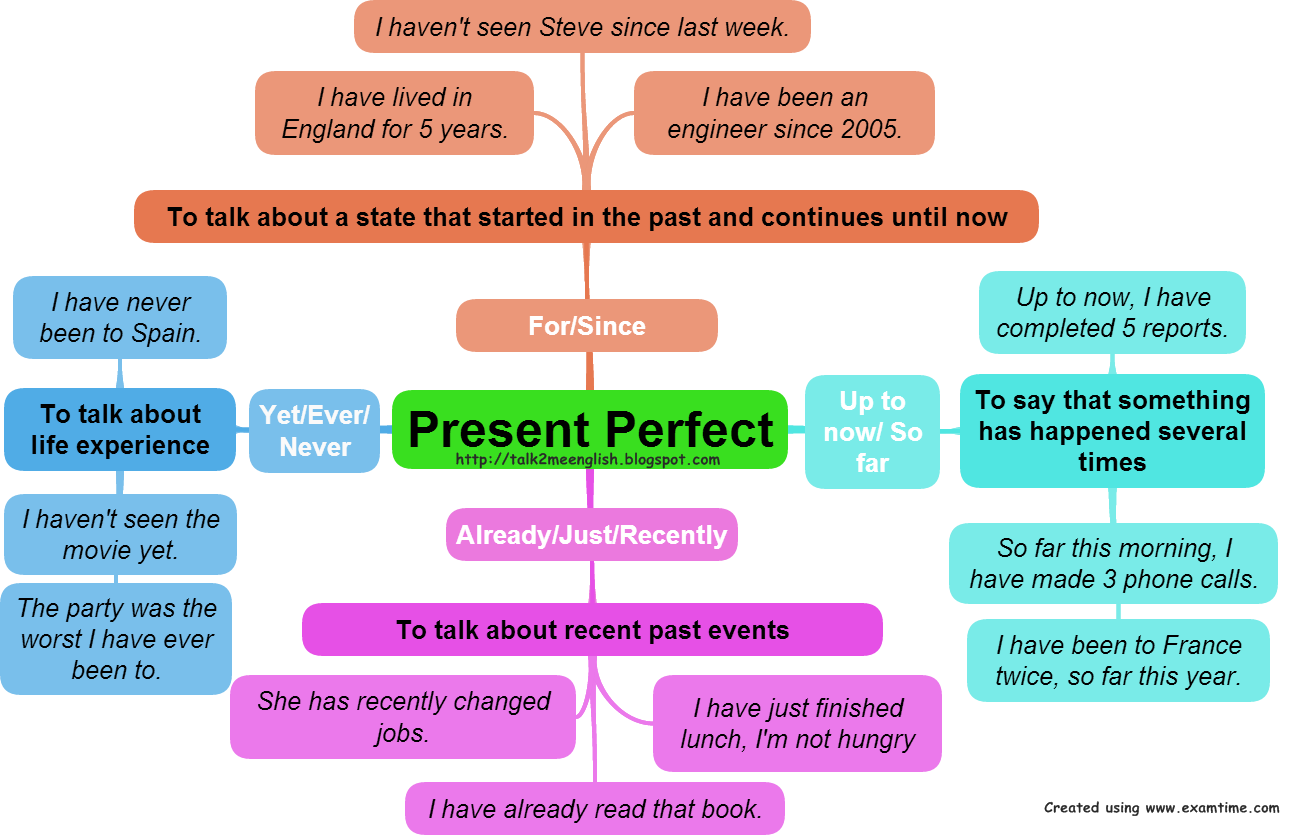
In this blog post I have created an infographic to simplify the Present Perfect tense, my objective is to make this tense less intimidating for students. 

Students arrive with a built in aversion to the Present Perfect tense and generally speaking they find it illogical and confusing. I have experimented with a number of different ways of teaching the Present Perfect tense: I've tried combining it with the Present Perfect Continuous, contrasting it with the Past Simple and teaching just one use of the tense at a time. I have found that the most successful method is to start by focusing on four common uses of the Present Perfect tense.  I provide my students with lots of practical examples and situations, focusing on the use rather than the meaning of the tense.  Once they have become more confident, I then move on to comparing and contrasting with other tenses. 

In addition to the infographic, I have given some examples of ways to practise the four uses in class and a list of web exercises with answers that could be given to students for self study.


https://magic.piktochart.com/output/1482813-the-present-perfect-tense